Tornado Watch vs Warning
Know the Difference, Stay Alive
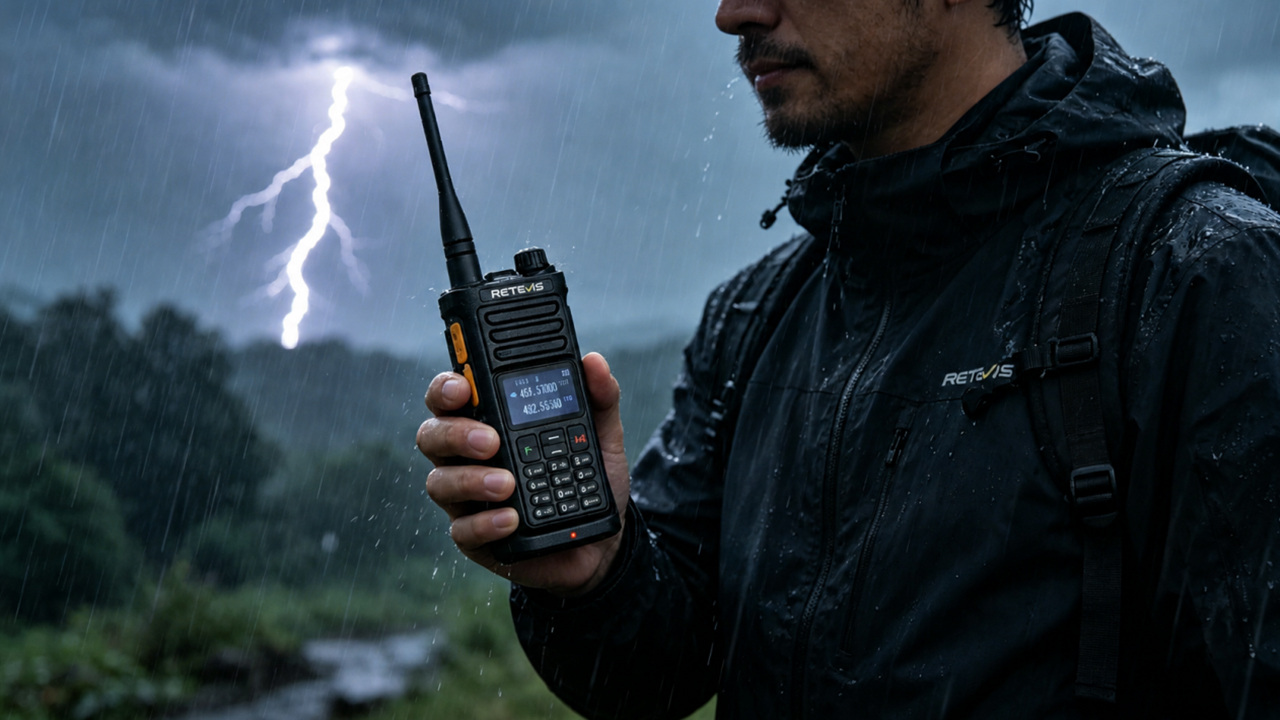
A plain-language safety guide based on NOAA & NWS standards — plus a reliable offline radio to keep you informed when cell service goes down.
Why Phone Alerts Aren't Enough
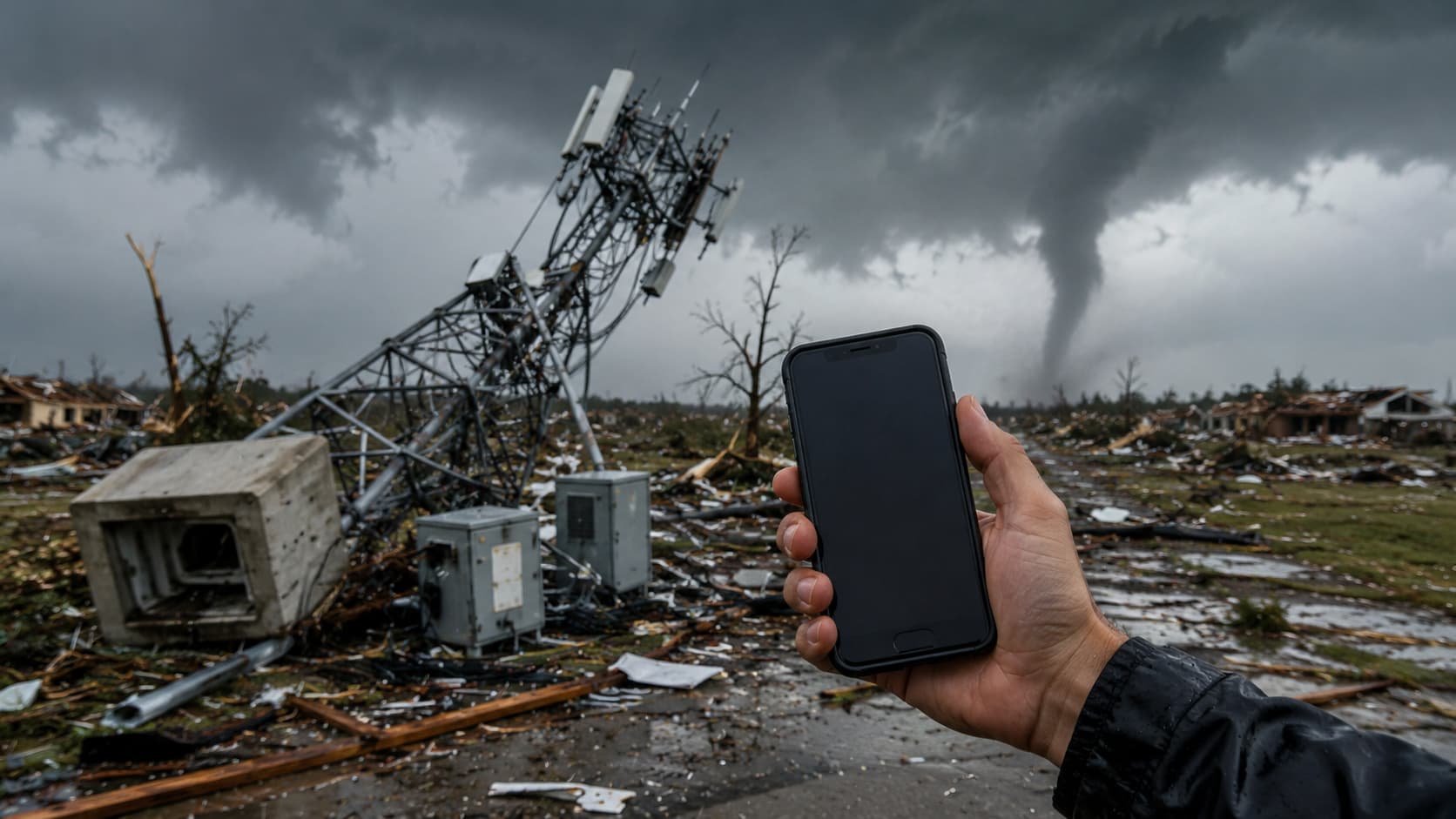
Most people rely entirely on cell phone emergency alerts for tornado watches and warnings from NOAA and NWS. But official NWS data shows violent tornadoes can destroy local cell towers in seconds. Once networks fail, phone alerts and mobile internet stop completely — leaving you with no real-time updates during a life-threatening storm.
To close this gap, a dedicated weather radio with offline signal reception is essential for every household in Tornado Alley and other storm-prone zones. Tune into the NOAA Weather Radio network for continuous forecasts, hazards, and public safety information. Its Weather Alert feature switches automatically to a warning channel when NOAA broadcasts a severe alert.
Watch vs Warning: The Core Difference
Tornado Watch: Stay alert. Conditions are favorable for tornadoes to form, but none has been detected yet.
Tornado Warning: Take shelter now. A tornado is confirmed on radar or by sight and is approaching fast.
Simply put: a warning means immediate, life-threatening danger; a watch is an early heads-up for possible storms.
Side-by-Side Comparison
| Detail | Tornado Watch | Tornado Warning |
|---|---|---|
| Issuing Authority | NOAA Storm Prediction Center | Local National Weather Service Office |
| Current Weather | Atmosphere supports tornado formation; none detected yet | Tornado detected by radar or spotted by storm observers |
| Risk Level | Potential risk, no immediate threat | Immediate life-threatening emergency |
| Coverage & Duration | Large multi-county area, lasts 2 to 6 hours | Local targeted zone, lasts 30 to 60 minutes |
| Required Action | Monitor updates and get ready for storms | Evacuate to safe shelter right away |
What Is a Tornado Watch?
A tornado watch is a preventive alert issued when conditions become unstable enough to breed tornadoes, large hail and damaging straight-line winds. It covers broad regional areas, not single cities, giving residents early notice of incoming severe weather.
A watch does not mean a tornado is already on the ground — only that all the ingredients are in place and storms can develop suddenly. Most phones will not send pop-up alerts for a watch, so you must track weather news yourself.
Key Safety Steps During a Watch
Keep your phone's emergency weather alert function fully turned on.
Pause all outdoor activities, including hiking, yard work and long-distance driving.
Check your family emergency plan and confirm the location of your indoor safe room.
Refresh local real-time weather forecasts every 15 minutes to track storm changes.
What Is a Tornado Warning?
A tornado warning is a top-level emergency alert for immediate danger. Local NWS offices issue it once radar captures a rotating storm signature, or storm spotters confirm an active tornado on the ground. This means deadly damage will hit your location within minutes.
All mobile devices receive loud pop-up alerts automatically. There is no waiting time for confirmation — tornadoes often move with less than 15 minutes of early warning. Cell alerts are not 100% reliable in strong storms, so a backup weather radio is always recommended.
Key Safety Steps During a Warning
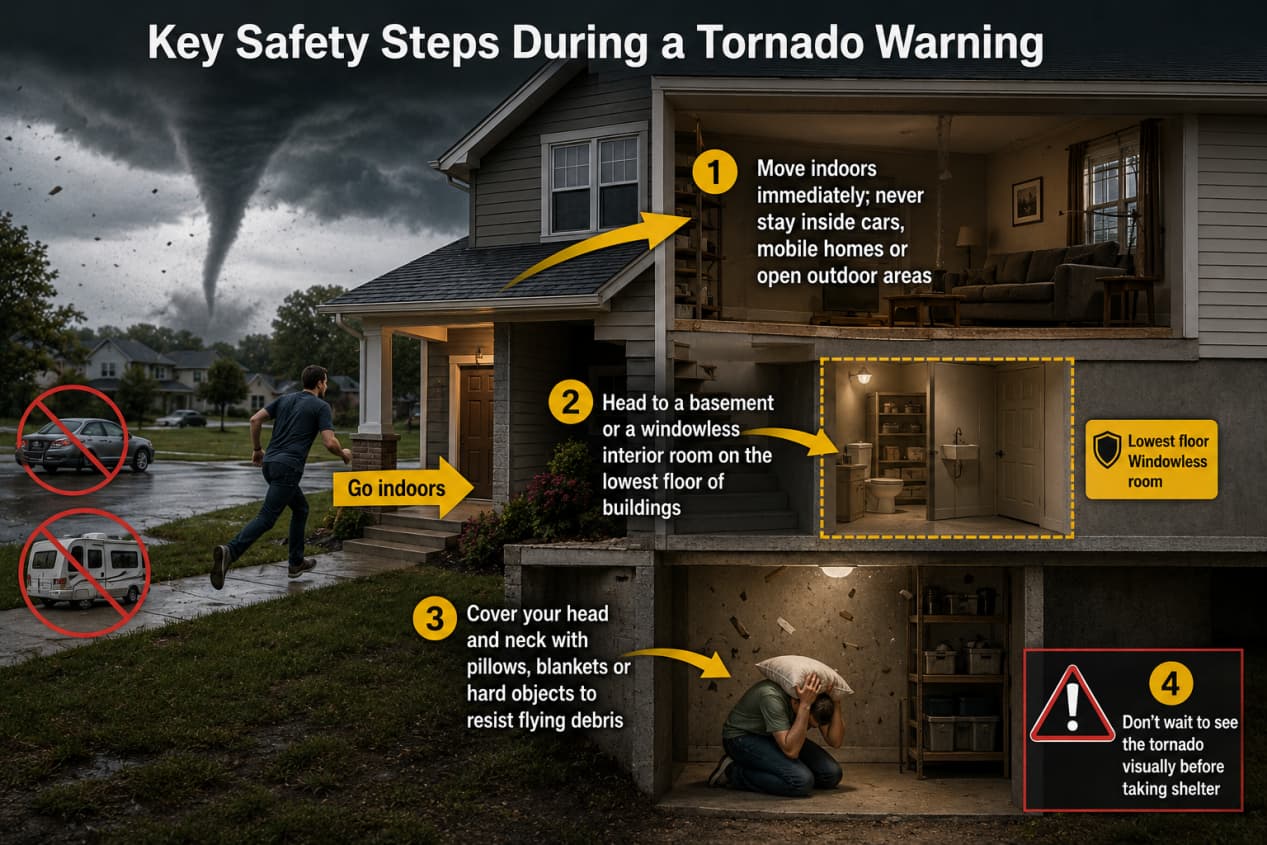
Move indoors immediately; never stay in cars, mobile homes or open outdoor areas.
Head to a basement or a windowless interior room on the lowest floor.
Cover your head and neck with pillows, blankets or hard objects against flying debris.
Do not wait to see the tornado before taking shelter.
3 Common Myths Debunked
Myth 1: Tornado watches are not dangerous and can be ignored.
Fact: Severe thunderstorms can strengthen extremely fast. Most warnings start as regular watches. Ignoring early alerts leaves you no time to prepare when storms escalate.
Myth 2: Clear sky means no tornado risk during a warning.
Fact: Tornadoes can hide behind heavy rain, dark clouds or dust. Always follow official NWS alerts, not your own observation.
Myth 3: Severe thunderstorm warnings are the same as tornado alerts.
Fact: Severe thunderstorm warnings only cover strong winds and large hail, without confirmed rotation. They carry far lower risk than tornado warnings.
Frequently Asked Questions
Which is more serious — watch or warning?
A warning is much more serious. A watch is only an early preparation notice, while a warning means an active tornado is approaching and you must take shelter immediately.
Can tornadoes happen during only a watch?
Yes. Some fast-developing supercells can spin up a tornado quicker than forecasters can issue an updated warning. Always stay alert even under a watch.
How long does a typical watch last?
Standard watches last 2 to 6 hours, covering the peak window for severe weather across the monitored region.
Must-Have Emergency Gear
Retevis RA89G High Power GMRS Handheld Ham Radio
If you want a reliable offline tool to back up official NWS weather alerts, the Retevis RA89G High Power GMRS Handheld Ham Radio is a strong storm-safety companion. It fixes the biggest weakness of phone alerts and matches NOAA weather broadcast standards — double protection for tornado emergencies.
Professional NOAA Weather Broadcast & Alert
Tune into the NOAA Weather Radio network for continuous forecasts, hazards and public safety information. The Weather Alert feature auto-switches to a warning channel when NOAA broadcasts a severe alert. It receives full-range official alerts — tornado watch, tornado warning, severe thunderstorm and flash flood — with no cell service, Wi-Fi or data needed.
Practical Dual Alert System for Group Response
The local alarm triggers a loud siren on the device the moment a warning comes out. The remote alarm sends instant alerts to all paired team radios at once — so your family coordinates fast whether you shelter separately or work with community teams.
Unlike ordinary single-function weather radios, the RA89G combines professional NOAA monitoring and long-distance two-way communication in one rugged device. With high-power GMRS signal, it reaches farther than ordinary walkie-talkies — ideal for suburban, rural and Tornado Alley areas where cell coverage is unstable. From early watch monitoring to rapid warning evacuation, it adds a critical safety layer for your whole family.
Watch Means Get Ready. Warning Means Take Cover.
Knowing the difference between a tornado watch and warning is one of the simplest, most effective ways to protect your family during tornado season. Never underestimate severe weather alerts. Prepare supplies in advance, keep your phone alerts on, and always follow official NWS and FEMA guidance. Small awareness differences can prevent injuries and losses in extreme weather.